Masai Masai is a small park compared to Serengeti and Kruger, but has Africa’s highest density and home to the great migration from July to October
The Masai Mara National Reserve is Kenya’s most iconic wildlife destination and one of Africa’s most celebrated safari landscapes. Renowned for its exceptional wildlife density, dramatic river crossings, and wide-open savanna plains, Masai Mara National Reserve delivers some of the most consistent and rewarding game viewing experiences on the continent.
Beyond the main reserve lies a network of community-owned wildlife conservancies, forming the greater Masai Mara ecosystem. Together, they protect vital habitats, support local Maasai
communities, and offer a contrasting safari experience defined by lower visitor density, flexible activities, and high-quality wildlife encounters. Winner of WTA awards as “Africa’s Leading Park” for many consecutive years is a testament of authentic wildlife journeys and experiences.
The Masai Mara National Reserve under the management of Narok County Government, together with its adjoining community conservancies coordinated under the Masai Mara Wildlife Conservancies Association (MMWCA), covers approximately 1,510 square kilometres (583 square miles). The landscape sits at elevations ranging from 1,480 to 2,280 metres above sea level, creating a mosaic of rolling grasslands, riverine forests, escarpments, and open savanna.
This region forms the northern section of the Mara–Serengeti Ecosystem, a vast transboundary wilderness extending across southern Kenya and northern Tanzania and covering close to 25,000 square kilometres.
Masai Mara National Reserve has repeatedly earned global acclaim, including the World Travel Awards’ as Africa’s Leading National Park, securing the title for six consecutive years and reclaiming it again in
2024 and 2025.
Although the reserve represents only a small fraction of the Serengeti’s total size, it supports extraordinary biodiversity. The ecosystem is home to approximately 90 mammal species and an exceptional bird population exceeding 500 species, making it one of Africa’s most wildlife-rich areas
per square kilometre.
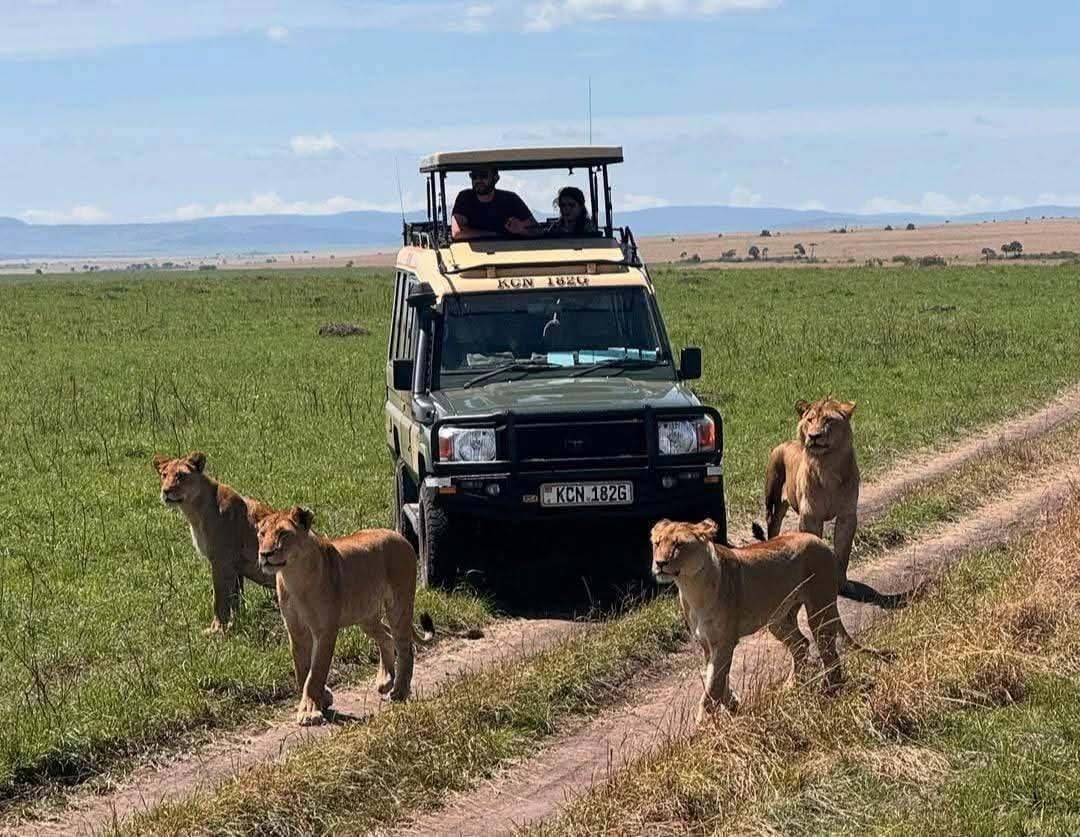
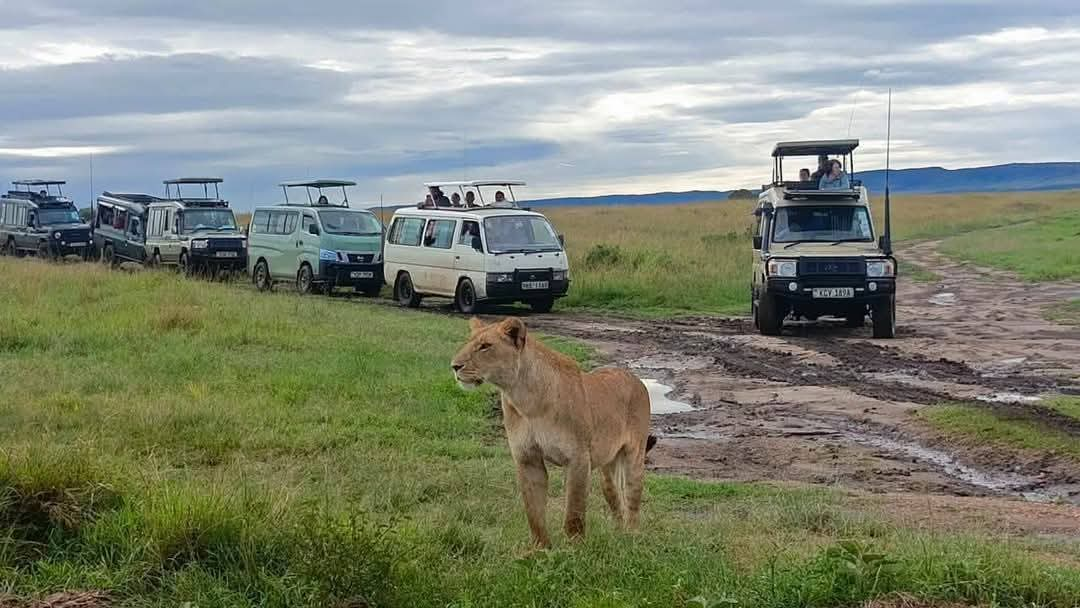
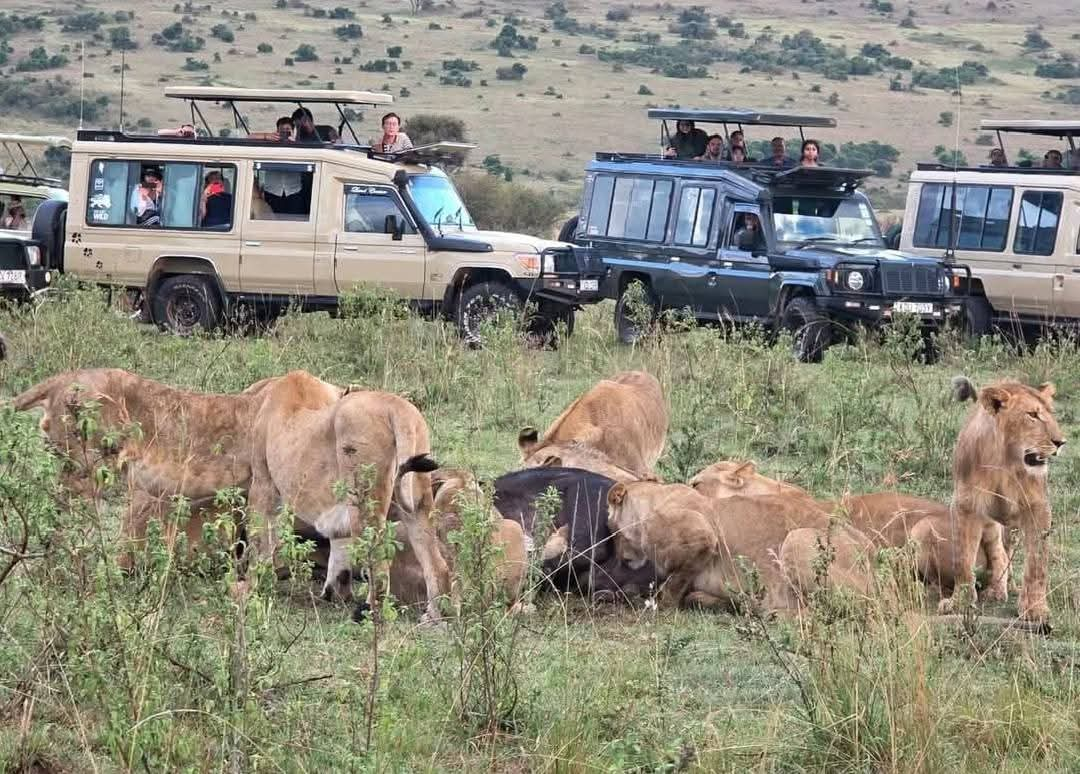
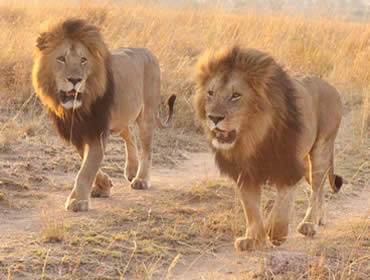
One of the Masai Mara National Reserve’s defining characteristics is its remarkably high predator density, particularly lions. Current estimates place the lion population within the reserve and conservancies at between 900 and 1,000 individuals, accounting for:
With a lion concentration index approaching 59%, Masai Mara National Reserve consistently outperforms most major wildlife destinations when it comes to predator sightings.
By comparison, South Africa’s Kruger National Park supports a larger absolute number of lions across a vastly bigger area, resulting in significantly lower density. While sightings are possible in many parks, the
frequency and ease of lion encounters in Masai Mara National Reserve remain exceptional.
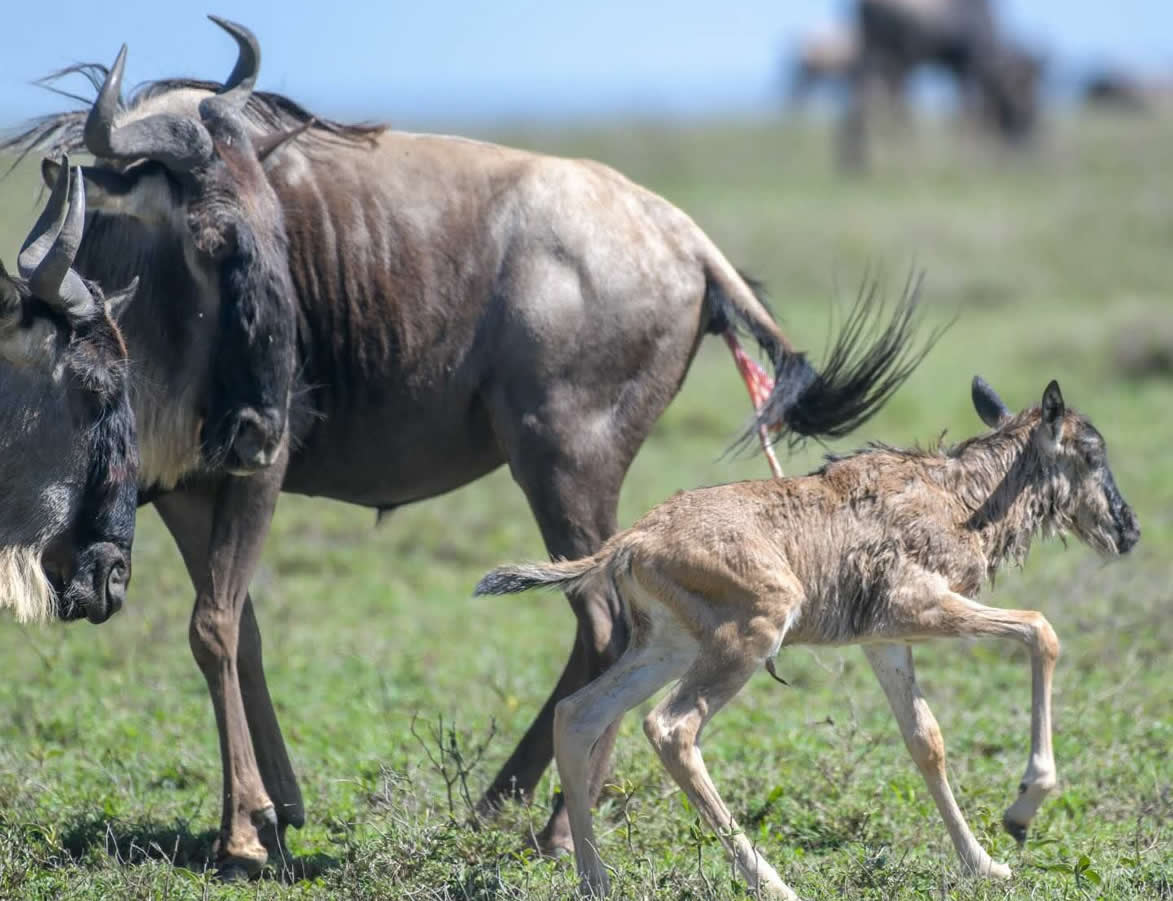
Masai Mara National Reserve is globally associated with the Great Wildebeest Migration, one of the natural world’s most dramatic spectacles.
Migratory herds spend much of the year in Tanzania’s Serengeti, but their seasonal movement into Kenya creates an intense concentration of wildlife within Masai Mara National Reserve comparatively compact landscape.
During this period, over one million wildebeest, zebras, and gazelles converge on the reserve, intensifying predator activity and producing the iconic Mara River crossings, which are often more frequent and visually concentrated than elsewhere in the ecosystem.
Tourism in the Masai Mara operates through a dual model:
Together, these components create a balanced system that supports conservation,
community livelihoods, and diverse visitor expectations.
Olare Motorogi Conservancy – Exceptional predator density, particularly strong for lion, leopard, and cheetah sightings.
Mara North Conservancy – Classic savanna scenery with reliable year-round wildlife viewing.
Ol Kinyei Conservancy – Resident lion prides, cheetahs, and abundant plains game.
Mara Naboisho Conservancy – One of Africa’s premier big-cat areas,
supporting an estimated 100 resident lions and ideal for walking safaris.
Naboisho is also known for rare species including
aardvark, serval, caracal, aardwolf, and honey badger,
alongside outstanding birdlife.
Oloisukut Conservancy combines open grasslands, forested areas,
riverine corridors, and bushland ecosystems. It serves as a critical
elephant movement corridor, linking Mara North, the greater Mara,
the Mara Triangle, and the Nyakweri Forest.
(Source: Masai Mara Wildlife Conservancies Association – MMWCA)
The Masai Mara National Reserve is consistently ranked among Africa’s
finest safari destinations. Named Africa’s Leading National Park at the World Travel Awards for six consecutive years and again in 2024 and 2025, the Mara’s reputation is built on extraordinary wildlife encounters, iconic landscapes, and world-class safari experiences.
A safari to Masai Mara National Reserve delivers reliable, high-quality game viewing
throughout the year, supported by large resident wildlife populations.
From mid-year, this experience is dramatically enhanced by the arrival of migratory herds and predators moving north from the Serengeti, creating intense wildlife concentrations between June and October.
Masai Mara National Reserve hosts some of the most dramatic moments of the Great Wildebeest Migration. As vast herds of wildebeest and zebras
cross into Kenya, the Mara River crossings become focal points of action, with powerful predator–prey interactions unfolding along the riverbanks.
While migration timing varies with rainfall patterns, peak crossings typically occur between July and October, offering exceptional opportunities
for wildlife viewing and photography.
The professionally managed Greater Mara Conservancies, coordinated
under the Masai Mara Wildlife Conservancies Association, elevate the safari experience
beyond the main reserve.
Together, they deliver a more intimate and immersive safari experience while
directly supporting community-led conservation.
Masai Mara National Reserve is defined by vast rolling savannahs, scattered acacia
trees, riverine forests, and distant escarpments that create sweeping panoramic views.
The Mara River, winding through the landscape before flowing into the Serengeti, adds contrast and drama — particularly when viewed from a hot-air balloon at sunrise.
This diversity of habitats supports rich wildlife interactions and provides outstanding conditions for photography and nature-based travel.
Masai Mara National Reserve is home to the Maasai people, whose culture remains deeply connected to the land. Cultural visits offer meaningful insight into traditional lifestyles, customs, and knowledge systems that have coexisted with wildlife for generations.
Visits to Maasai cultural villages are a rewarding addition to a safari, particularly for families and first-time visitors.
Masai Mara National Reserve offers one of the most diverse activity portfolios in East Africa, including:
Recognised as an Important Bird Area (IBA), Masai Mara National Reserve supports over 500 bird species, including resident, migratory, and regionally
rare species. Its mix of plains, woodlands, riverine forests, and rocky outcrops delivers excellent birding throughout the year.
Through the Masai Mara Wildlife Conservancies Association (MMWCA), local Maasai communities actively manage conservancies, ensuring tourism revenue supports conservation, land protection, and community livelihoods. This model is widely regarded as a benchmark for sustainable wildlife tourism in Africa.
Masai Mara National Reserve is well connected by road and by scheduled or charter flights
from Nairobi, making it suitable for both short stays and extended safaris.
Masai Mara National Reserve is particularly well suited for:
Below is a guide to notable safari lodges and camps in the key regions of Masai Mara National Reserve, organised by price tier (Economy < $199, Comfort < $299, Premier < $499, Luxury < $599, Opulent ≥ $600). We focus on meaningful safari properties — excluding very small budget tents or campsites unless they sit in key locations.
The Sekenani Gate cluster on the eastern edge of the reserve is one of the most popular accommodation hubs, offering easy access to central Mara game drives.
Comfort
AA Lodge Mara – Spacious rooms and family-friendly service near the Sekenani entrance.
Sentrim Mara Camp – Midrange tents and lodge facilities with a bigger footprint for families or groups.
Premier
Sekenani Camp – Quality tented comfort just outside the gate with bush ambience.
This central cluster inside the reserve sits close to major game circuits and the Mara River.
Comfort / Premier
Keekorok Lodge – Classic Mara lodge, centrally located with easy wildlife access.
Ashnil Mara Camp – Riverside property well-placed for migration viewing.
Luxury / Opulent
Sala’s Camp – Boutique luxury on the Mara’s northern corridor.
(Other high-end properties in this region include Serenas and seasonal river mobiles — ideal for migration views but vary by guide/offer.)
Just outside the reserve’s northeast entrance, Talek offers a broad range of lodges that are easy to integrate into self-drive safaris.
Comfort
Fig Tree Camp – Large tented canvas with scenic river access.
Mara Leisure Camp – Tent and cottage-style rooms with family facilities.
Ilkeliani Camp – Boutique rooms with river views and a peaceful setting.
Premier / Luxury
Mara River Camp – Riverside comfort with en-suite tents and wildlife view.
Near the Musiara Marsh and the northern circuit (close to Governors’ Camps and Musiara Airstrip), this area is excellent for wildlife encounters and richer river scenery.
Luxury / Opulent (Examples)
Fairmont Mara Safari Club – Known for riverside luxury and views.
Mara Serena Safari Lodge – Elevated hillside setting with panoramic views and wider facilities.
South-east of the reserve, along the Ololaimutia axis, this area blends community-area lodges with relaxed midrange comfort.
Economy
Osero Enarau Camp – Quiet lodge near Sekenani Road.
Olomoran / Olmorani Camp – Midrange riverside stops with good value.
Premier
Zebra Plains Camp – Well-appointed tents near conservancy edges.
Pricing mentioned here is a typical nightly range and can vary by season, inclusions, room type, and package.
These region clusters reflect convenient safari bases that align with main access gates such as Sekenani, Talek, Ololaimutia, and Musiara.