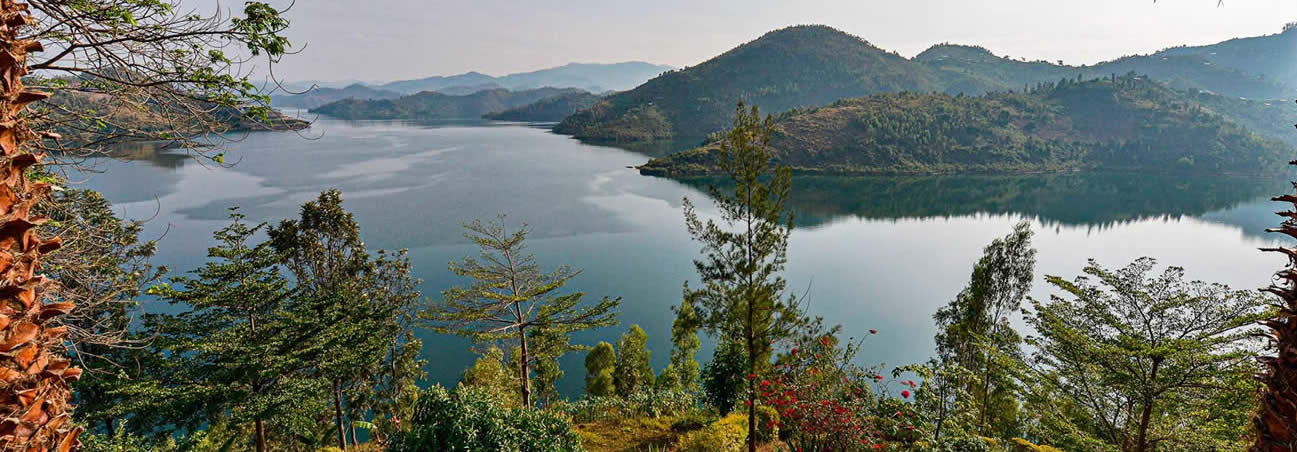
Unlike the savannah parks of Akagera or the mountain forests of Volcanoes National Park, Lake Kivu provides a peaceful lakeside escape. Visitors can explore small islands, enjoy boat excursions, swim safely in the freshwater lake, or simply unwind at scenic waterfront lodges.
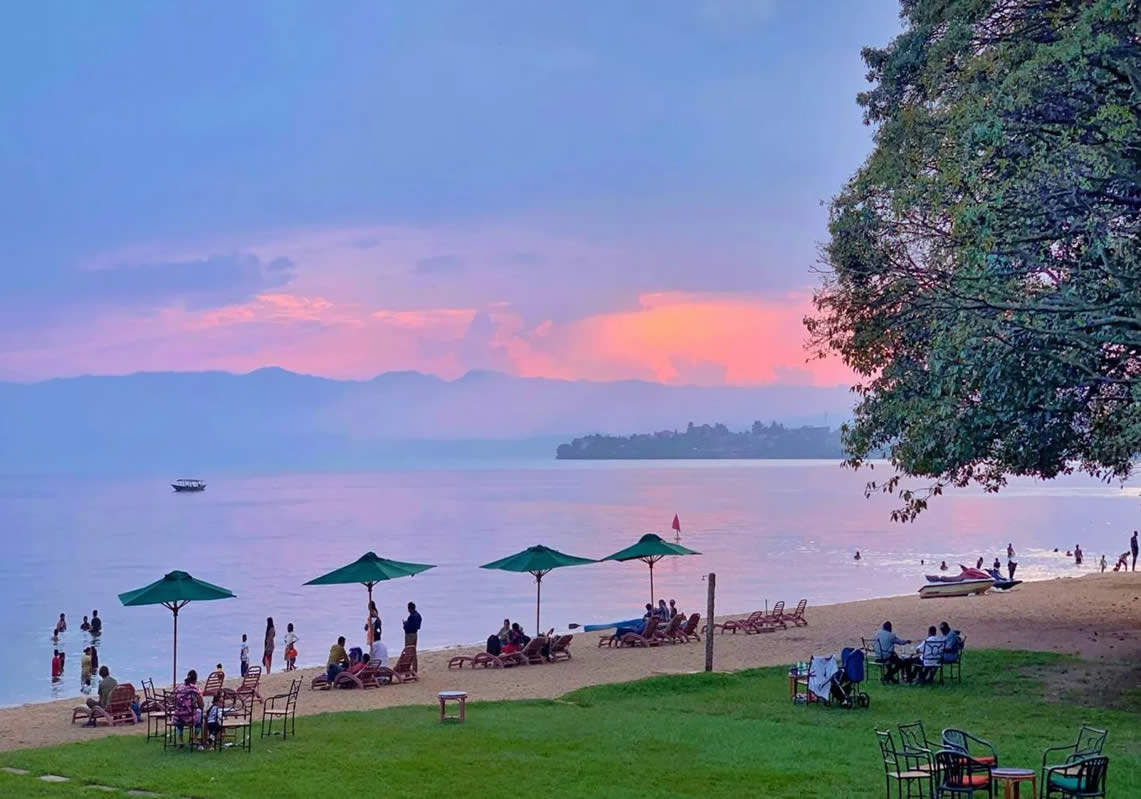
Two regions stand out as the most popular bases for exploring the lake: Karongi, known for its quiet island-dotted shoreline, and Rubavu, a lively beach town with resorts, cafés, and vibrant lakeside activity. Together, they showcase the diverse charm of Lake Kivu’s shoreline.
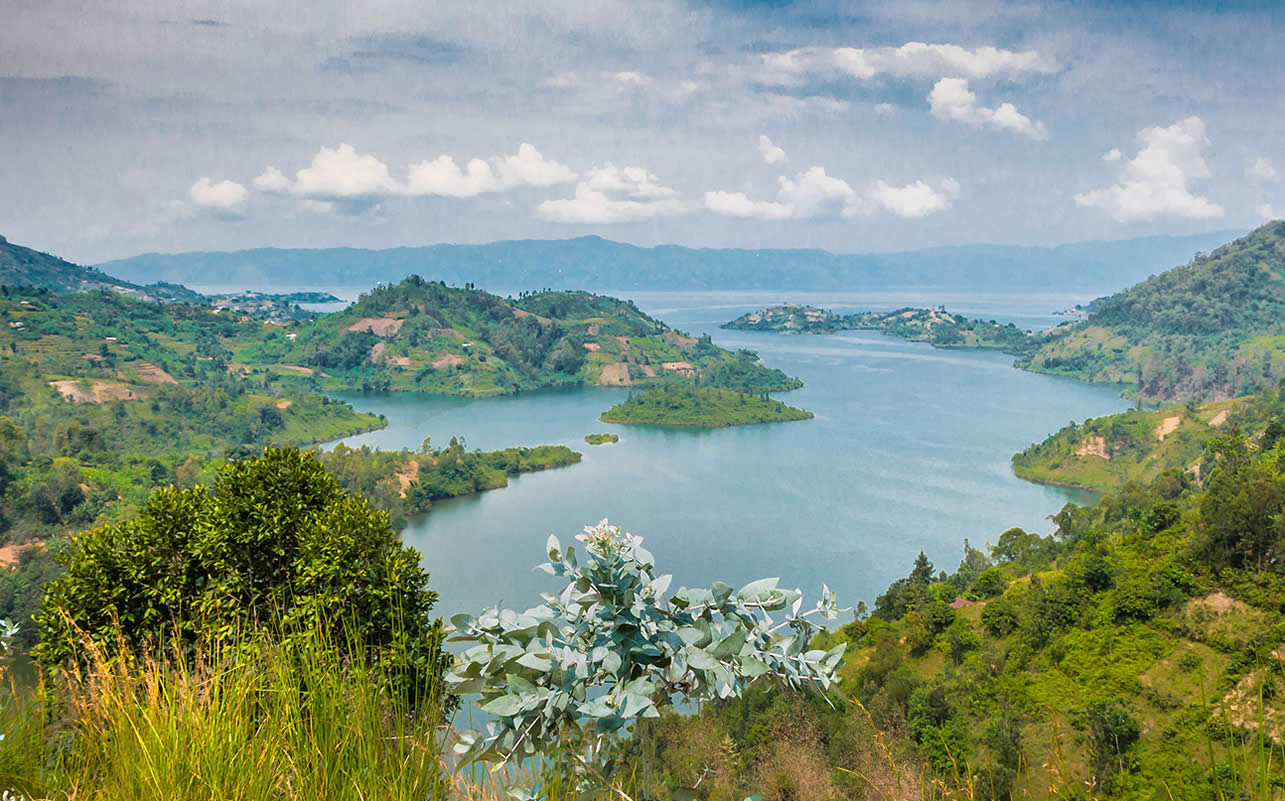
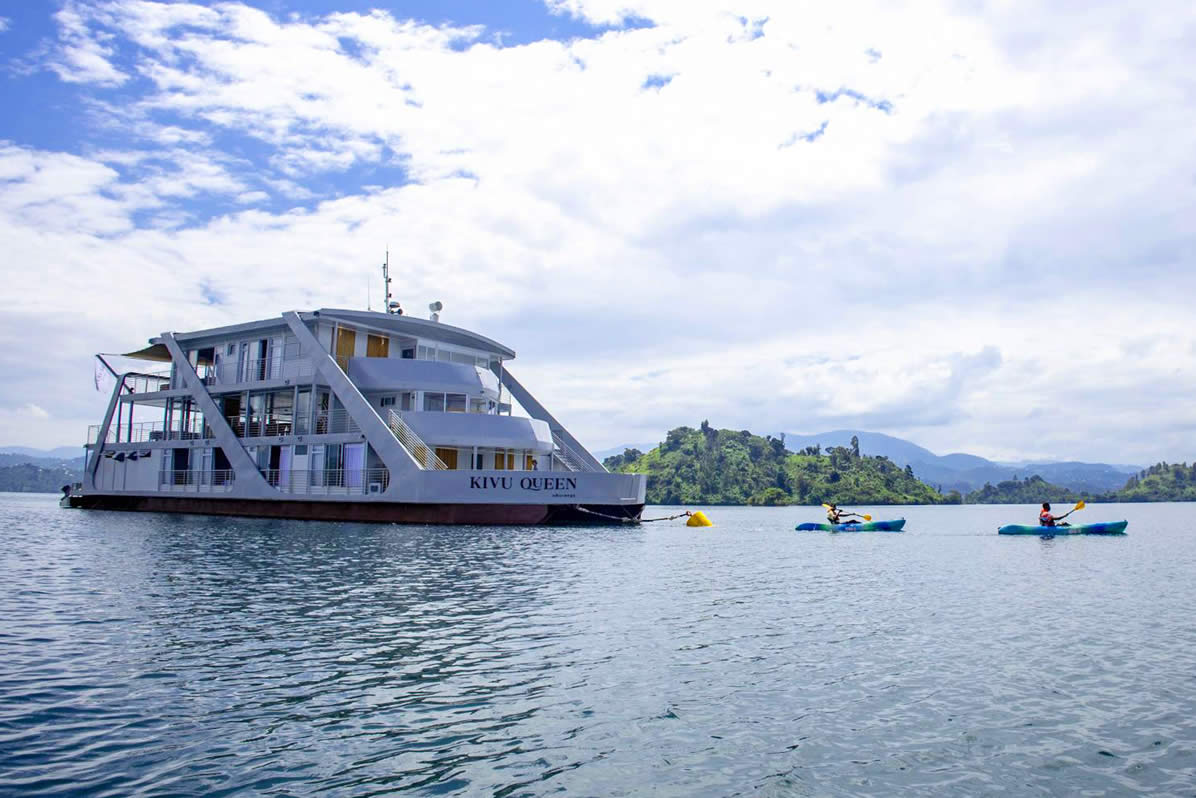
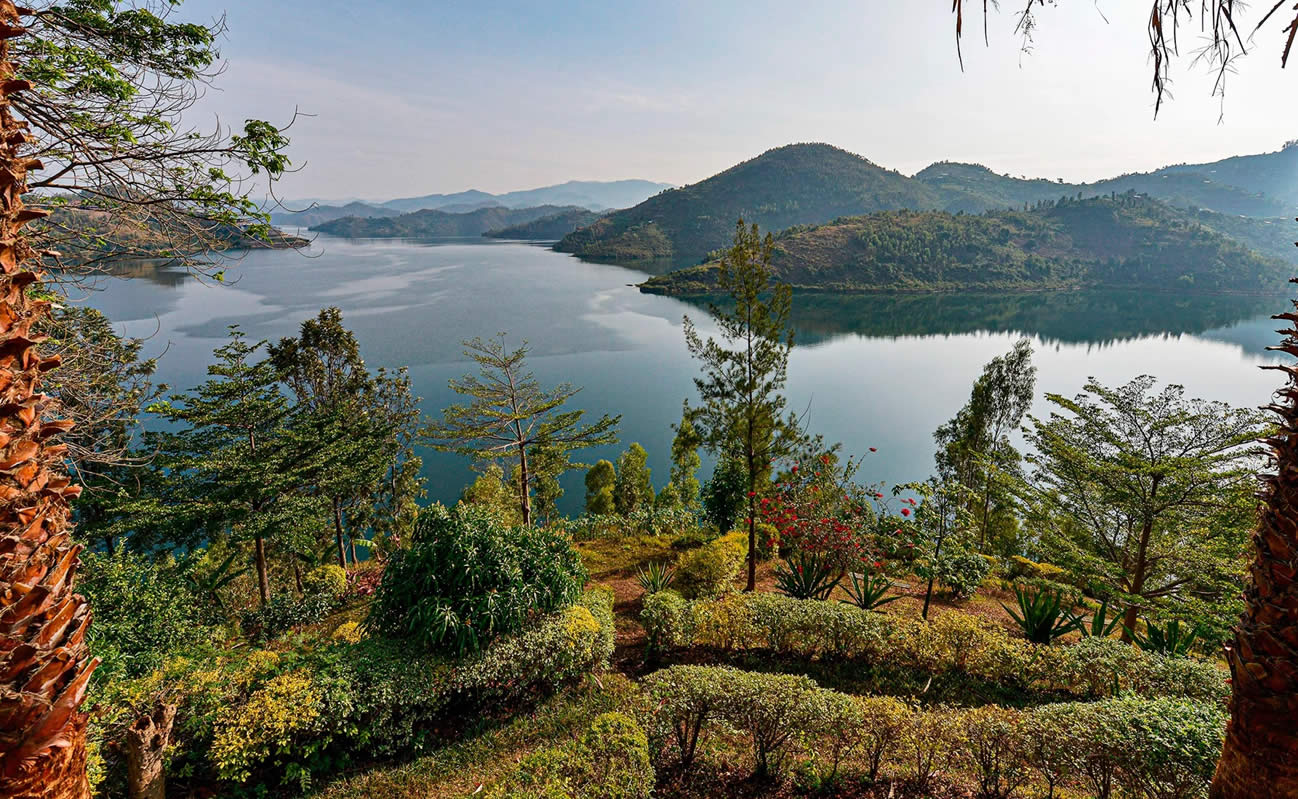
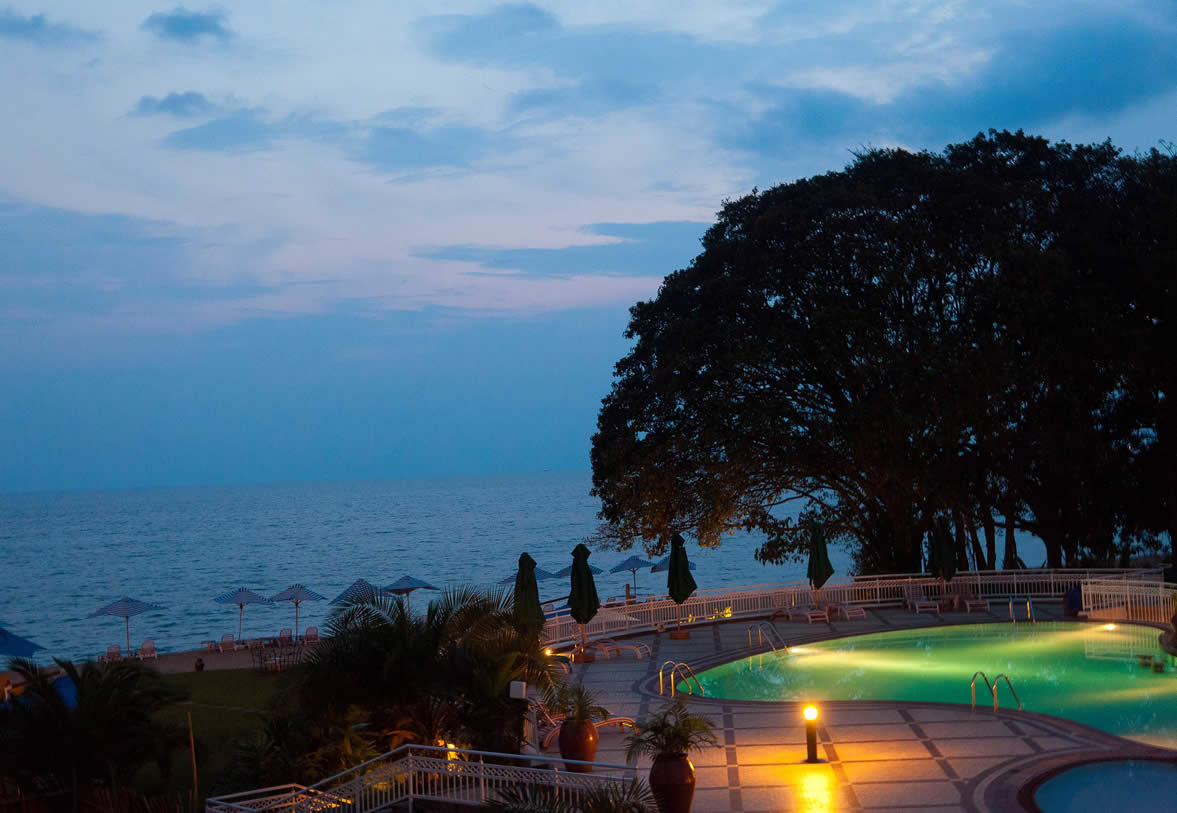
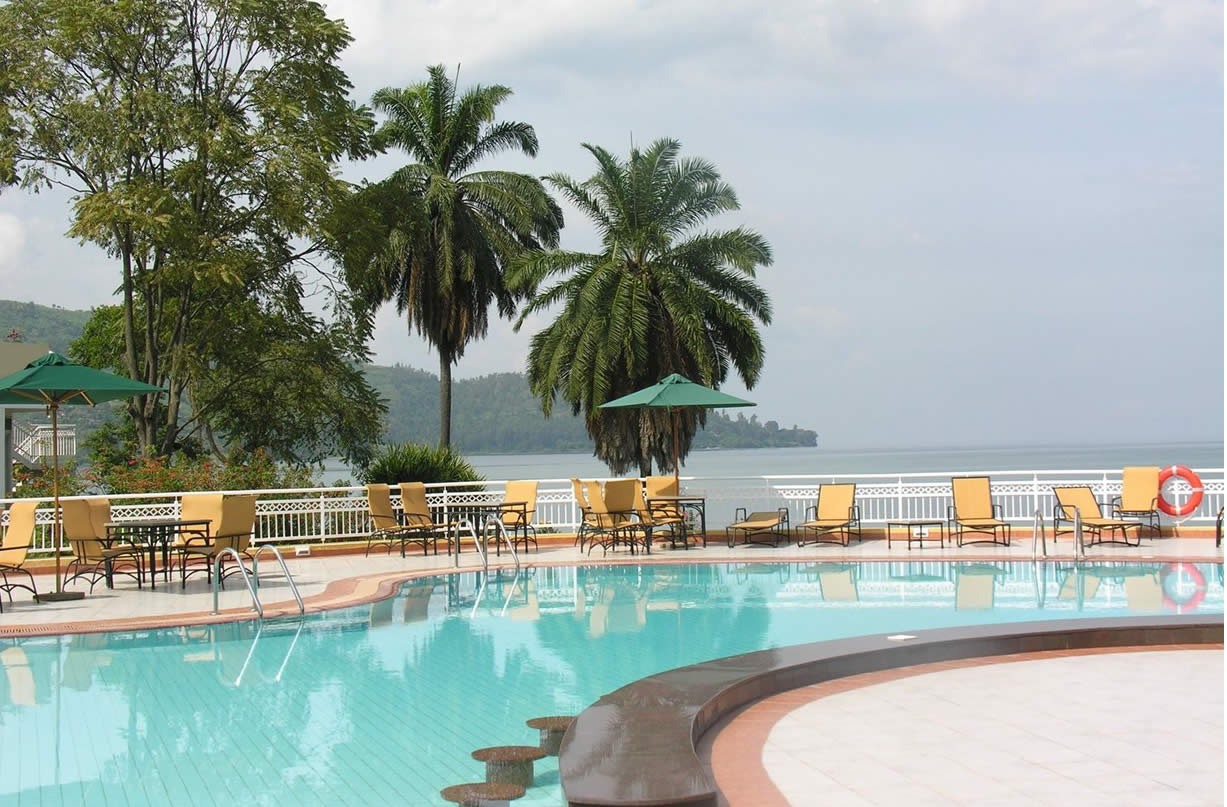
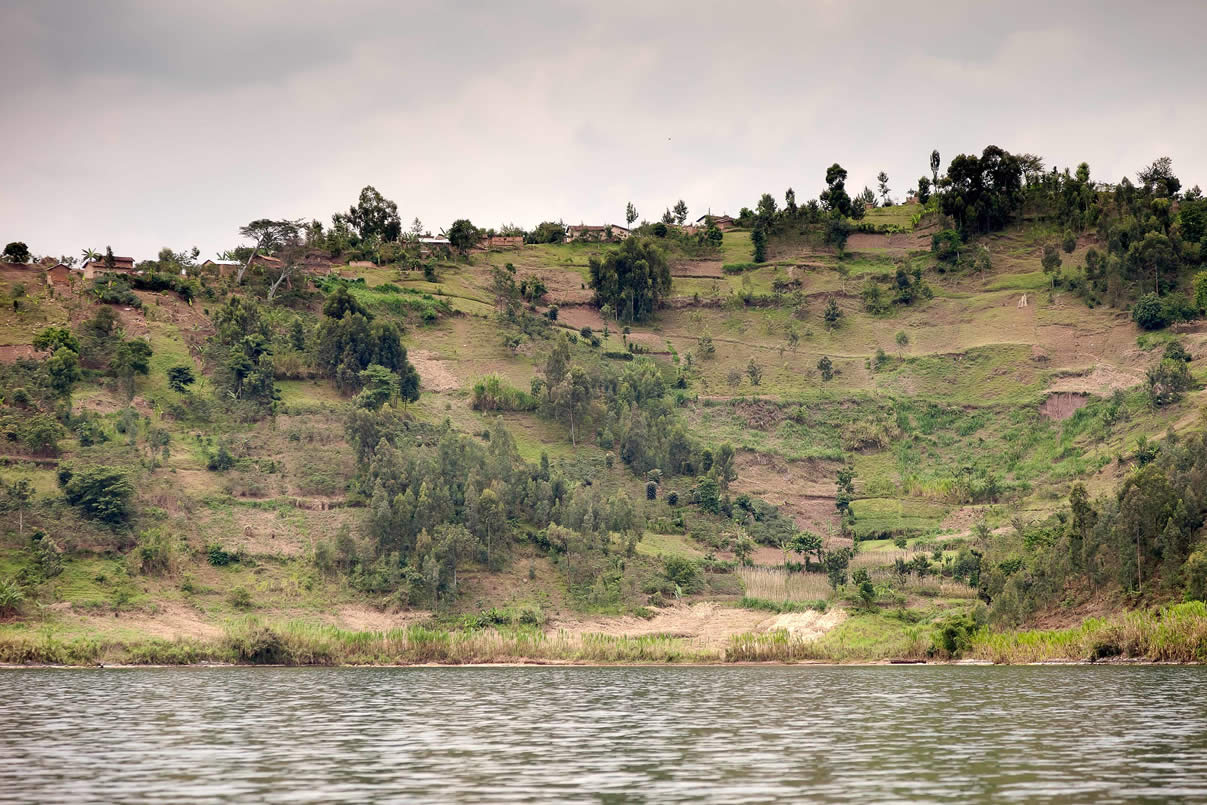
Part of Africa’s Great Rift Valley, Lake Kivu lies along Rwanda’s western frontier with the Democratic Republic of Congo. Surrounded by steep green mountains and dotted with scenic islands, the lake’s deep emerald waters cover an area of about 2,700 km². It is Rwanda’s largest lake and one of the deepest lakes in Africa.
Two of the most popular destinations along the lake are Rubavu in the north and Karongi further south. Rubavu, formerly known as Gisenyi, was once a colonial lakeside resort and today offers lively beaches, historic lakeshore villas, and relaxed waterfront cafés. About 100 km south, Karongi (formerly Kibuye) is widely considered one of the most beautiful towns on Lake Kivu, known for its quiet bays, small islands, and peaceful lakeside atmosphere.
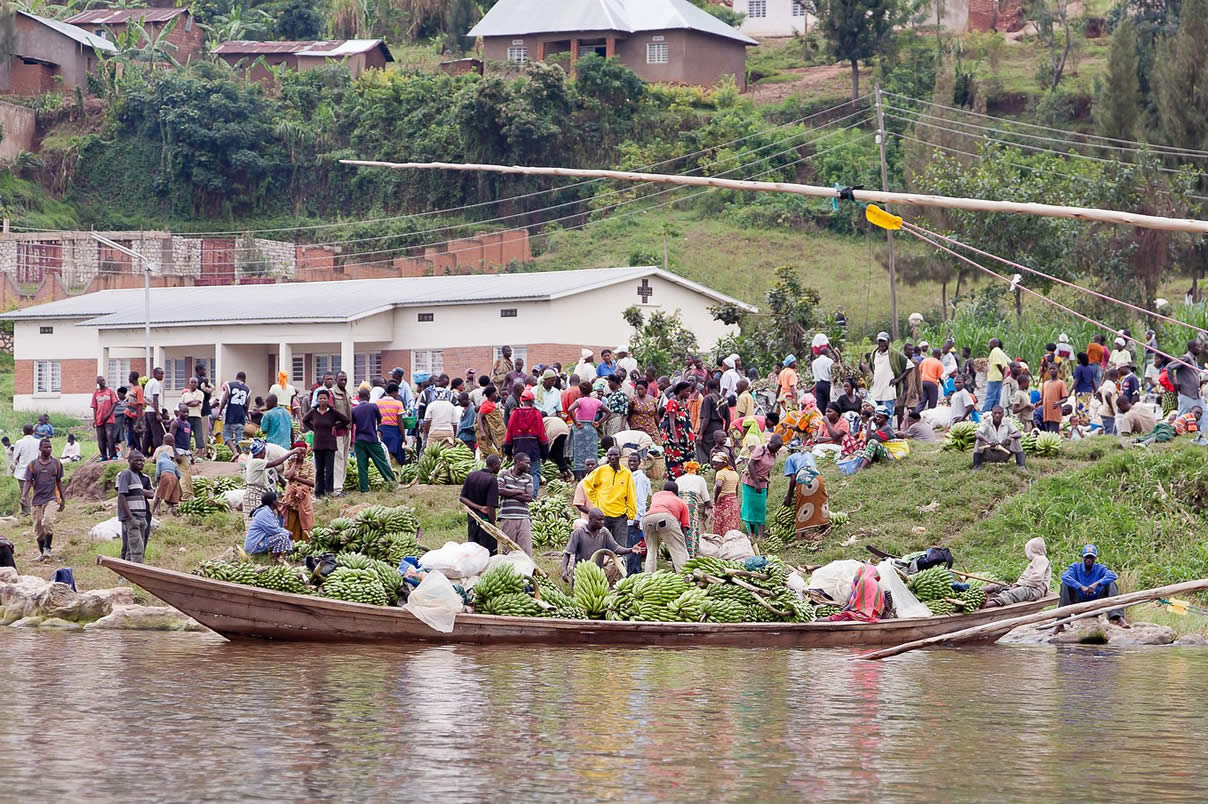
Lake Kivu also forms the backdrop of the famous Congo Nile Trail, a 227 km adventure route that follows the eastern shoreline from Rubavu to Rusizi. The trail passes through coffee plantations, terraced hillsides, fishing villages, and forested hills, making it one of Rwanda’s most scenic hiking and cycling routes.
Lake Kivu forms a natural border between Rwanda and the Democratic Republic of Congo.
The Congo Nile Trail is a long-distance adventure route running along the eastern shoreline of Lake Kivu from Rubavu in the north to Rusizi in the south. Covering approximately 227 km, the trail offers breathtaking views of the lake while passing through rural villages, tea plantations, coffee farms, and forested hills.
The trail typically takes around 10 days to hike or 5 days to cycle. Dry seasons are generally the best time to explore the trail as heavy rains can make some sections muddy and difficult to navigate.
Most accommodation around Lake Kivu is clustered in two main areas: Rubavu (Gisenyi) on the northern shore and Karongi (Kibuye) in the central part of the lake. Gisenyi offers classic resort-style hotels and mid-range options close to a lively town and long sandy beach, while Karongi provides a quieter, more intimate setting with scenic boutique lodges and island-dotted views.
Below is a tiered selection of recommended places to stay, focusing on properties typically priced from mid-range upwards (around USD 80+ per person per night sharing), and highlighting location and what guests tend to appreciate about each.
There are no commercial flights directly to Lake Kivu, so most visitors arrive first in Kigali at Kigali International Airport (KGL). A range of international and regional airlines serve Kigali, including carriers such as Kenya Airways, RwandAir and other major African and global airlines.
From Kigali, Lake Kivu is reached by road transfer arranged through your safari operator, hotel or car‑hire company.